







How do you choose a school when every brochure uses the exact same vocabulary to promise success? True education does not happen on glossy paper. It happens when structural investments match the daily routine of a growing child. If you are examining CBSE Affiliated Boarding Schools in Dehradun, you must look past the generic slogans. The Doon Valley contains dozens of residential options, but real intellectual growth requires purpose-built facilities and specific teaching frameworks.
Choosing from CBSE Boarding Schools in Dehradun requires analyzing the physical reality of the campus. The TonsBridge School, established in April 2013 on Subharti Hospital Road, offers a practical case study for this approach. The institution occupies an 18-acre campus at the meeting point of the Tons and Nimmi rivers. This geography creates a natural boundary against town traffic. It provides a quiet zone where students can focus entirely on high-level academic work without urban distractions.
How the CBSE Syllabus Works Here
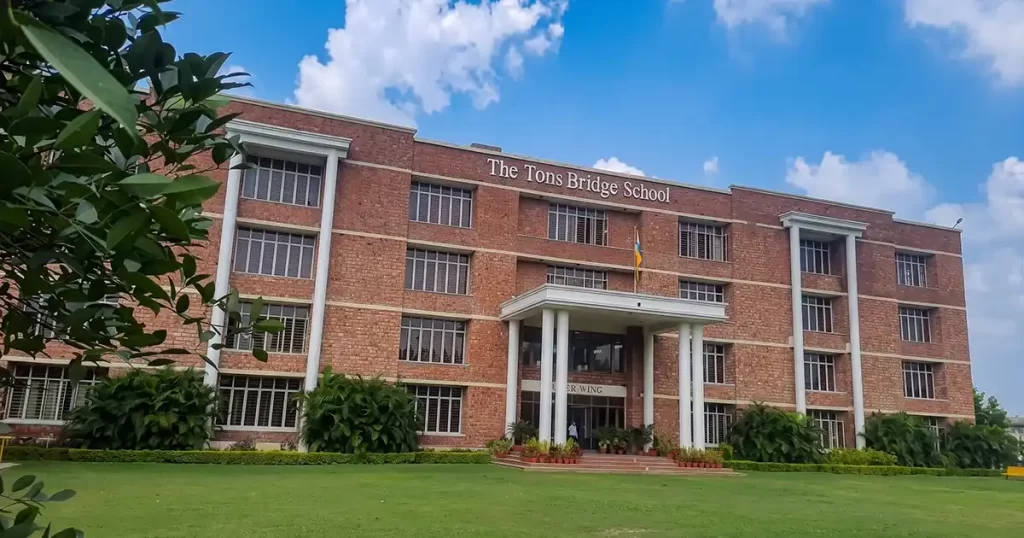
The academic setup at Boarding CBSE schools in Dehradun cannot remain trapped in old methods. The school uses active physical tools to deliver the central board curriculum instead of relying on heavy textbooks.
For instance, the campus features a dedicated Virtual Reality Lab to change how students see abstract concepts. They do not just memorize chemical structures or galactic coordinates from a static page. Instead, they put on headsets to walk through microscopic structures and alter planetary movements in three dimensions. This visual interaction creates strong memory hooks. It ensures that students retain technical data long after their final examinations end.
Grading follows a highly individualized plan. Teachers do not judge a child based on a single high-pressure test at the end of the term. From Grade III, which is the baseline entry year for residential boarders, the faculty records specific learning speeds every single week. This consistent tracking lets teachers spot difficulties before they turn into real learning failures. It keeps the classroom transparent and supportive for every student.
Key Features of the Study Program
- Teacher-to-Student Ratio: A 1:12 ratio is maintained in classrooms. Teachers cater to every child individually and hence, no student ever feels neglected.
- Technical Tools: Real VR headsets and robots are used in classrooms. Students create objects with their own hands. This helps make the abstract concepts from textbooks practical.
- Preparation for Exam: Preparation for the JEE and NEET is a part of the academic calendar. Boarding students prepare at school premises and do not have to travel anywhere on weekends.
- Scholarships Based on Performance: Scholarships, like the Dr. A.P.J. Abdul Kalam, are provided to students with excellent scores in Classes XI and XII.
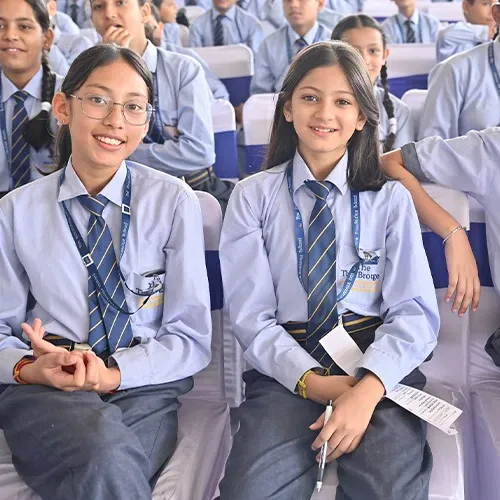
Senior students often face severe fatigue because they try to balance board exams with national entrance tests. Most boarding systems force their boarders to travel to outside coaching centers on weekends. The TonsBridge School eliminates this split schedule by bringing the preparation directly into the daily timetable. Through a structural partnership with premier training institutes, senior boarders attend regular classes for JEE, NEET, NDA, and CUET inside their own school buildings. This setup saves hours of exhausting travel time, maintains a balanced daily workload, and keeps student focus sharp.
Sports and Physical Training
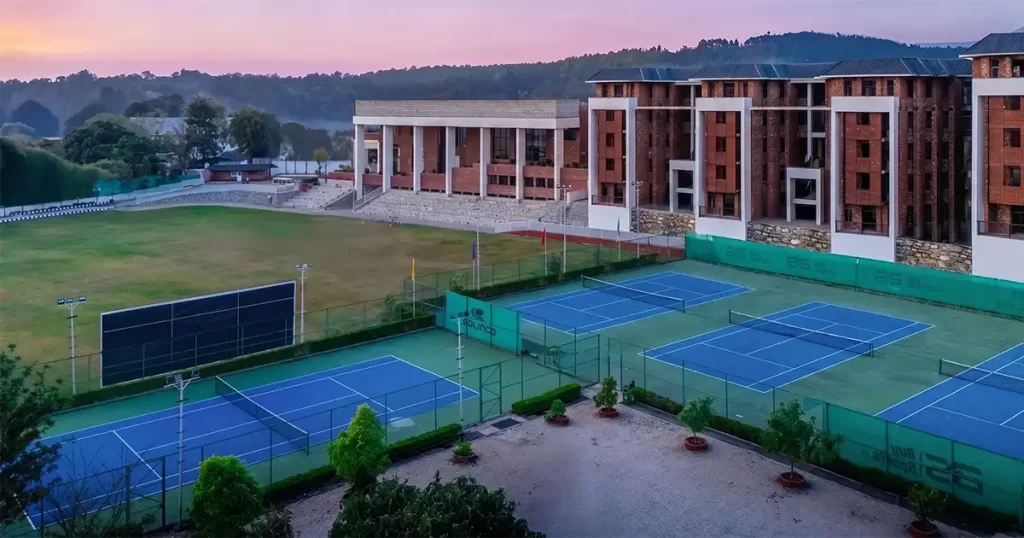
Athletic arenas at the best cbse school in dehradun should act as training grounds for the mind rather than casual play spaces. The sports facilities are built for heavy, daily use throughout the changing seasons.
The school operates four synthetic lawn tennis courts to give all age groups immediate access without long waiting lists. Playing singles tennis puts a young person in complete isolation. It demands fast decisions and absolute emotional control during a match. This mental toughness moves directly into classroom preparation, increasing a student’s capacity to think clearly under tight exam time limits.
The equestrian program involves the use of an in-house stables containing four horses and a special arena for riding. The art of riding demands extreme self-control. A horse responds instantly to the silent tension carried by its rider. Young riders have to develop skills to manage their fear and keep themselves composed in order to handle the animal.
Winter cold routinely breaks fitness habits across schools in northern India. To fix this gap, the campus includes an all-season semi-Olympic swimming pool. Boarders train without breaks through the high heat of July and the deep chill of December. This continuous year-round schedule builds physical endurance and personal discipline. It shows students the real value of steady effort over short, irregular bursts of work.
Hostels and Campus Safety
Living away from parents requires a residential layout that balances personal privacy with safety. The hostel blocks are constructed from the ground up to support both rest and regular study.
Separate residential areas for boys and girls feature large, well-ventilated rooms with attached washrooms. These layouts avoid the crowded, unhygienic conditions of traditional dormitories, reducing social friction among roommates.
Every evening, boarders follow a mandatory study cycle called “prep.” Class teachers stay inside the Hostel study halls during these specific hours. They act as academic mentors to answer questions right away. This transforms evening study into a helpful workshop instead of a lonely task.
Security relies on strict physical measures. The 18-acre boundary is guarded 24/7 by professional ex-army personnel and a continuous CCTV camera network. Biometric scanners handle all entry and exit points, while every school bus uses real-time tracking systems to guarantee safety during transit.
Medical Support and Food Science
True physical growth requires careful attention to daily nutrition and medical care. The school manages these needs with scientific precision rather than treats them as secondary duties.
The school mess completely rejects cheap, mass-processed ingredients. A major portion of the weekly menu relies on fresh, organic items sourced directly from local regional farms. This ensures a clean caloric balance for active athletes. The kitchen staff plans meals to give steady, long-lasting energy, preventing the sudden tiredness that ruins afternoon classroom concentration.
Medical situations are managed by an on-site infirmary with a separation ward and a recovery room. The resident medical team works directly with local hospitals and medical colleges to ensure instant specialist care if an emergency occurs.
However, physical fitness is just one aspect of taking care of the students. The school has two full-time counselors within its campus, one for student wellness and psychological equilibrium and another for career direction. With this approach, the school takes equal care of the child’s psychological well-being and future university preparation as it does when issuing report cards for their terms.
Leadership and Social Growth
To make students internationally ready, the school makes use of social structures and student governance. Rather than segregating teenagers in one gender environment, the institution prepares students through collaboration in training programs to prepare them for their roles in the corporate world or public sector.
- Co-Education Balance: Mixing boys and girls from the primary years teaches natural communication and mutual respect. This social experience directly prepares students for future teamwork in global offices.
- Sunday Hawan: The entire residential community gathers weekly for a traditional hawan with school leaders. This simple ritual acts as a cultural anchor to reduce academic pressure and encourage personal reflection.
- Diplomacy and Debate: Active Model United Nations and Debating clubs force students to analyze global border disputes and resource issues. Members learn to defend tough positions and negotiate without stage fright.
- Specialized Activities: Optional hobby clubs expand logical thinking past the standard textbook syllabus. The Robotics Club handles mechanical programming, the Inquisitive Club cracks logic puzzles, and the Artisan Club teaches physical crafts.
The School History and Vision
The institutional direction of the school is shaped by its history. The late former President of India, Dr. A.P.J. Abdul Kalam, personally inaugurated the institution. He established a lasting standard focused on scientific thinking and national growth. This historical legacy forms the basis of the core school motto: True Knowledge Liberates.The ultimate target of the campus is not the passive collection of marks, but the creation of independent, articulate citizens who can think for themselves. When analyzing choices among CBSE Affiliated Schools in Dehradun, you must look closely at these concrete operational facts. The combination of modern labs, advanced sports infrastructure, secure hostels, and active student care is what makes a school stand out. By selecting a system built on practical application and clear personal growth, you ensure your child builds the habits and intellect needed for the real world.

Frequently Asked Questions
1. What is the minimum age for a child to join the boarding house?
The residential facilities are open for students from Grade III onwards. The school provides completely separate hostel buildings for boys and girls, featuring age-appropriate care, distinct study zones, and specialized wardens for younger children.
2. How does the school manage competitive exam preparation for senior boarders?
The school integrates entrance exam coaching for JEE, NEET, NDA, and CUET directly into the weekly timetable. By partnering with professional preparatory institutes, these specialized classes happen inside the campus, saving students from traveling to outside tuitions on weekends.
3. What is the admission process for students applying to higher classes?
From Class II onwards, candidates must take a written admission test that checks their skills in English, Hindi, and Mathematics. This is followed by a personal interview with the admissions committee. Registration usually begins in December for the academic term starting in April.
4. How does the 1:12 teacher-student ratio impact daily learning?
This ratio ensures small, focused learning groups. Teachers can easily monitor individual progress, give immediate feedback during evening study hours, and design specific help sessions for boarders who find certain CBSE topics difficult.
5. What healthcare setups are in place for residential students?
The campus includes a 24/7 infirmary staffed by trained medical professionals and equipped with an isolation ward. For advanced medical care or emergencies, the school maintains a direct tie-up with nearby medical centers and major hospitals.