








What happens after the last class of the day?
For a child living at school, that question matters as much as what happens inside the classroom. Dinner, study time, sports, friendships, bedtime, medical care and contact with family all become part of school life. That is why choosing among schools with hostel facilities in Dehradun needs a closer look at the residential side of the campus. Families comparing schools with hostel options will also find different models, from day-cum-boarding arrangements to full residential schooling.
Dehradun has several Boarding schools in Dehradun, including CBSE-affiliated schools, but the hostel experience can differ considerably from one campus to another. The room arrangement, supervision, academic support and daily schedule deserve a place on your school-visit checklist.
-
- How Does a Residential Setup Help Students?
- What Should You Check Before Choosing a Hostel?
- What Are the Benefits of Residential Schooling?
- What Can Be Difficult About Hostel Life?
- How Should Parents Compare Boarding Schools in Dehradun?
- The TonsBridge School’s Residential Programme
- Frequently Asked Questions
- Conclusion
How Does a Residential Setup Help Students?

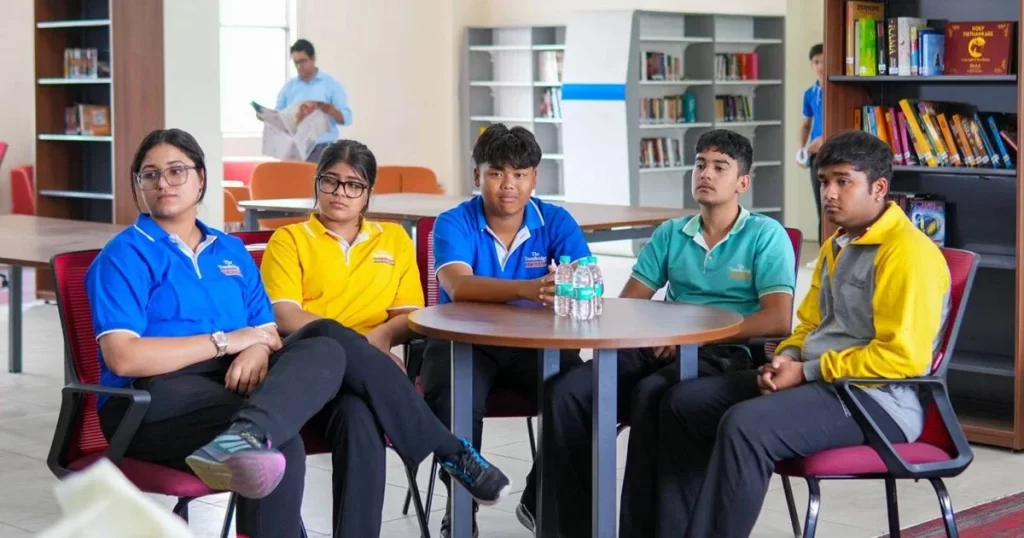
- Managing their own routine: Students follow a daily timetable for classes, meals, homework and sleep. They also learn to keep track of their belongings and arrive on time for scheduled activities.
- Getting help with schoolwork: A designated study period gives students time to finish assignments and revise lessons. Parents should ask whether teachers are available during these hours or whether a member of the residential staff supervises study time.
- Living with other children: Sharing a room means learning to respect another person’s space, adjust to different habits and resolve everyday disagreements. These experiences can teach children to consider other people’s needs.
- Making time for sport and hobbies: Residential schedules may include playground activities, swimming, music or other interests after lessons. The options depend on the school, so parents should check which activities boarders can actually attend.
- Having access to adult supervision: Wardens and residential staff oversee students outside class hours. Parents should find out who is on duty at night, whom a child can approach with a problem and what happens when medical attention is needed.
What Should You Check Before Choosing a Hostel?
A photograph of a dormitory tells you very little about what it is like to live there. During a school visit, look at the details that will shape your child’s ordinary day.
Start With the Dormitory
Ask how many students share a room. Where do they keep clothes and personal belongings? Is there a proper place to study? How are washrooms maintained?
Room sizes and arrangements vary. The TonsBridge School, for example, says its junior boarders stay in groups of eight, while senior students share four-student dormitories. Its dormitories have attached washrooms and an individual study area for each child.
Those details matter because younger children may need more support with shared living, while older students often need more privacy and quiet study space.
Ask What Happens After Classes
Evening hours can look very different from one school to another.
Some campuses have a designated prep period for homework and revision. Others may offer access to teachers or tutors after the regular school day. For older students, it is worth asking whether preparation for entrance examinations is included in the school timetable or has to be arranged separately.
This is particularly relevant when comparing CBSE boarding schools in Dehradun. A student preparing for Class X or XII examinations may have very different needs from a younger boarder who is still settling into residential life.
Look Beyond the Security Gate
A locked gate and CCTV cameras are only part of residential safety.
Ask who is responsible for students during the evening and overnight hours. Find out how visitors enter the residential area, how bullying complaints are handled, and who a child can approach if something feels wrong.
CBSE’s residential-school guidelines place specific emphasis on safety, visitor management, dormitory security and protection from bullying and other threats.
Medical arrangements deserve the same attention. Ask whether nurses are available, what happens when a child falls ill at night, and which hospital handles emergencies. CBSE also requires affiliated schools to observe applicable health, hygiene, drinking-water, fire and building-safety requirements.
Find Out What Students Eat
Food becomes a daily concern once a child lives away from home.
Ask to see a typical weekly menu. Check how often fresh food is served, whether the school accommodates allergies or medical dietary requirements, and who oversees food preparation. You can also ask how students communicate a food-related concern.
The important point is consistency. A good-looking dining hall on admission day does not tell you what students eat every week.
Check How Free Time Is Spent
Boarders have hours outside lessons. Those hours need somewhere to go.
Look at the sports grounds, swimming facilities, activity rooms, library and other spaces students can actually use after classes. Ask what the weekday and weekend schedules look like.
This is one area where residential schools in Dehradun can differ substantially. Two schools may follow the same board but provide very different opportunities outside classroom hours.
What Are the Benefits of Residential Schooling?
Living at school is a major change for a child, so the benefits should be considered alongside the adjustment involved.
More responsibility: A boarder has to keep track of belongings, follow routines, arrive on time and manage everyday tasks with less parental intervention.
A closer school community: Students eat, study and spend free time with their peers. That creates more opportunities for friendships and shared activities.
Less daily travel: Students who live on campus do not have to spend time travelling between home and school. That time can instead fit into sleep, study, sport or recreation, depending on the school’s schedule.
Academic support after class: A structured prep period can give students a regular time for homework and revision. For senior students, an integrated academic programme may reduce the need to travel to an outside coaching centre.
Access to activities: Boarders remain on campus after the school day, so sports, clubs and other activities can form part of their routine rather than being limited by the journey home.
What Can Be Difficult About Hostel Life?
The benefits do not mean that residential life is easy for every child.
Homesickness is one of the first issues to discuss. Ask how new boarders are introduced to their house, how they contact parents and whom they can approach when they are struggling.
Academic pressure is another consideration. A tightly scheduled evening can be useful for one child and tiring for another. Find out how the school notices when a student is falling behind or becoming overwhelmed.
Then there are ordinary disagreements between children. Ask who handles bullying, disputes over shared spaces and other complaints. A clear reporting process is far more useful than a general promise that students are “well cared for”.
How Should Parents Compare Boarding Schools in Dehradun?
Take the same questions to every campus you visit. That makes comparisons much easier.
- Boarding age: What is the minimum class for residential admission?
- Room sharing: How many students share each dormitory?
- Supervision: Who is responsible for students after classes and at night?
- Medical care: Is nursing support available? What happens in an emergency?
- Study time: Is prep compulsory? Are teachers available?
- Food: Can you see the menu and ask about dietary requirements?
- Communication: When and how can children speak to their parents?
- Devices: What are the rules for phones and other personal electronics?
- Activities: Which sports, clubs and facilities can boarders use after class?
- Senior academics: Is entrance-exam preparation available if your child needs it?
Do not rely on the school brochure alone. Walk through the residential areas and ask to see the spaces students actually use.
The TonsBridge School's Residential Programme
The TonsBridge School is a CBSE residential and day school in Dehradun. Its boarding programme accepts students from Grade III onwards and has separate hostel blocks for boys and girls.
The school’s published dormitory information gives parents specific details about the accommodation. Junior students stay in groups of eight, while senior dormitories accommodate four students. Each dormitory has an attached washroom and a dedicated study area for every child.

Academic preparation continues after regular classes through scheduled prep time. For senior students, the school states that it provides in-house preparation for JEE, NEET, NDA and CUET. Its boarding programme also includes 24/7 medical assistance through a collaboration with Graphic Era Institute of Medical Sciences. The school’s medical centre lists routine treatment, general and isolation wards, a recovery lounge and round-the-clock nursing and GDA support.
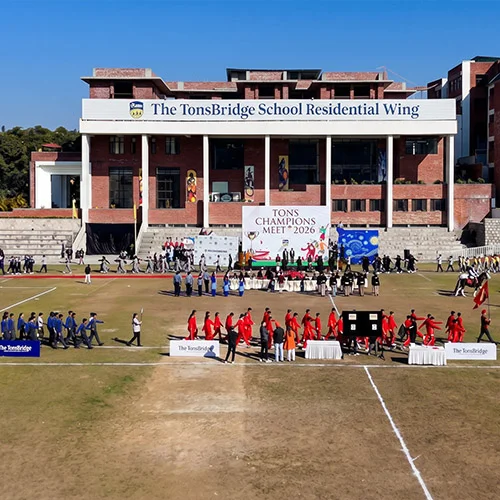
There is plenty for boarders to do outside study hours too. The school states that its 18-acre campus includes a semi-Olympic swimming pool, four synthetic lawn tennis courts, two basketball courts, a horse-riding arena with stables and a full-size football ground.
Frequently Asked Questions
What is a suitable age for boarding school?
There is no universal age. A child should be reasonably comfortable with daily routines, personal responsibilities and spending time away from home. The minimum boarding age also varies by school. At The TonsBridge School, residential admission starts from Grade III.
What should parents check in schools with hostel facilities in Dehradun?
Look at dormitory arrangements, supervision, medical care, food, study support, communication rules and after-school activities. A campus visit is the best way to assess these details.
Are boarding schools in Dehradun suitable for younger children?
Some accept younger boarders, while others begin residential admission at a higher grade. Parents should consider the child’s readiness as well as the level of support available to younger students.
What is the difference between day-boarding and full boarding?
In a day-boarding arrangement, students return home after an extended school day. Full boarding means students live on campus during the school term, including evenings, meals, study periods and recreational hours.
Do CBSE boarding schools in Dehradun provide competitive-exam preparation?
Some do and some do not. Parents of senior students should check whether JEE, NEET, NDA or CUET preparation is provided on campus and how it fits alongside the regular CBSE curriculum.
How can parents assess the safety of a residential school?
Ask about residential supervision, visitor access, dormitory security, medical support, emergency transport, bullying procedures and communication with parents. CBSE’s residential-school guidelines provide a useful reference when discussing these arrangements with schools.
Conclusion
The right schools with hostel option is not necessarily the one with the longest facilities list. Your child’s experience will depend on the ordinary details: where they sleep, who looks after them, what happens after class, how they receive medical care, what they eat and how easily they can speak to you.
When comparing schools with hostel in Dehradun, visit the residential areas, ask direct questions and compare the answers across campuses. A closer look at daily life will tell you far more than a brochure ever can.