








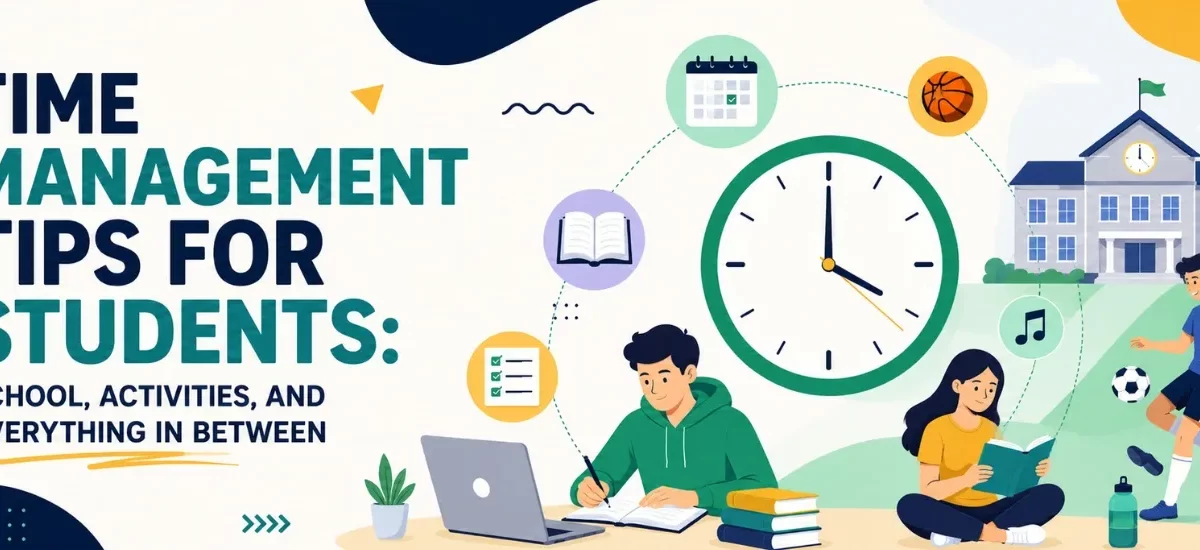
Being a student revolves around a million and one things. The main things are classes, assignments, and extracurriculars, but don’t forget the family obligations, and don’t forget the things you want to do for yourself, too!
The hardest part about school isn’t doing all of these things. It’s effectively managing your time to do all of these things.
You learn a lot of things in school, including how to manage your time. It’s the most important part. The main things are learning how to be organised and stay focused, knowing when deadlines are due, all while still being able to breathe.
When you learn to manage your time, being “busy” all day doesn’t mean your day will be full. It’s more productive to be purposeful.
Time management is important to learn if you want to be a good student. It really shines in performance and consistency.
The good thing about managing your time well is that it gives you control. Once you know what to do and how long it’s going to take, you are going to feel prepared and calmer, not rushed.
- Important vs. Urgent
- Build a System Instead of Relying on Pure Motivation
- Eat That Frog
- Deep Work — Focus Over Frequency
- Plan the Week Instead of Just the Day
- Tackle Large Tasks Bit by Bit
- Don’t Neglect Fun and Relaxation
- Follow a Realistic Daily Routine
- Take Five Minutes to Review the Day
- Learn to Say No
Important vs. Urgent

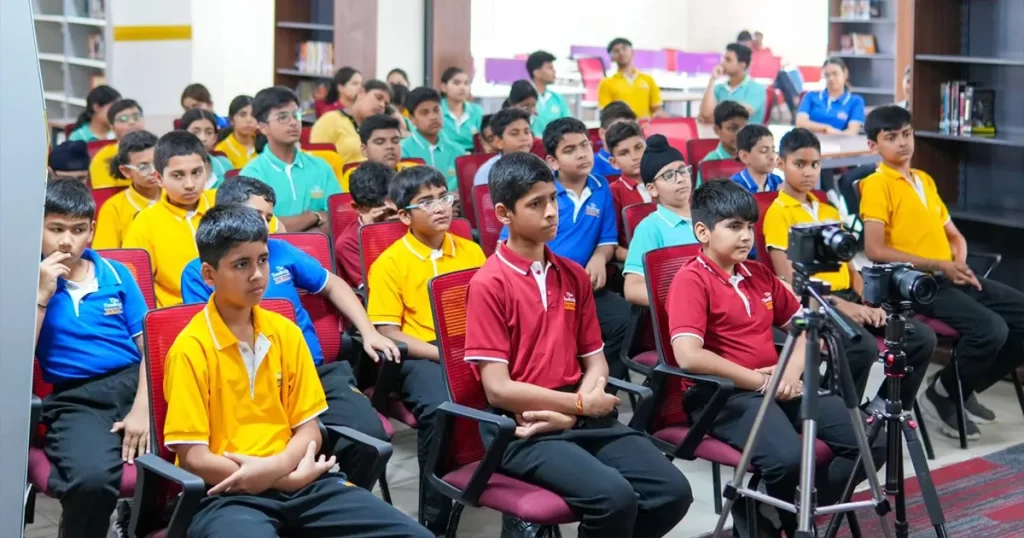
Remember the work of Stephen Covey?
Specifically, the part about the things that are important and the urgent things, and how the most urgent thing isn’t always the most important?
This is super useful for students because it gives a solid basis for what to prioritise.
- Important tasks — assignments, study prep, revisions for upcoming tests, and so on.
- Less important tasks — phone surfing and other time-burning distractions. Removing mindless time-spending habits frees you up for the things that actually matter.
A basic three-item priority list can make a real difference day to day if you stick to it.
Smart Classrooms: Where Every Lesson is Brought to Life
If the classroom is the brain of the school, then the dining hall is definitely its heart. We are miles away from the outdated tradition of “hostel food.” At The TonsBridge School, we treat the experience with the same rigor that we treat our physics curriculum. It is an accepted fact that a student’s mind is inescapably associated with their tongue.
The menu is a carefully charted course in terms of nutrition and flavor. We think that Sunday roasts or the rightly seasoned regional dishes have been able to do much more than simply satisfy the stomach, for they have been able to provide the crucial function of giving children that feeling of belonging. When the nutritional values are the best, the performance in the playing field as well as in the exam room is also the best.
Build a System Instead of Relying on Pure Motivation
Motivation alone is not sustainable. The best students implement some kind of system to monitor their own progress and sustain momentum. A few good ones:
- Use timers to practise focused work.
- Keep notes and materials in designated spots to limit time lost looking for things.
- Designate certain spots for studying to remove distractions.
- Set tasks for yourself the evening before to stay ahead of the day.
Systems tend to reduce day-to-day choices, and that makes everything easier.
Eat That Frog
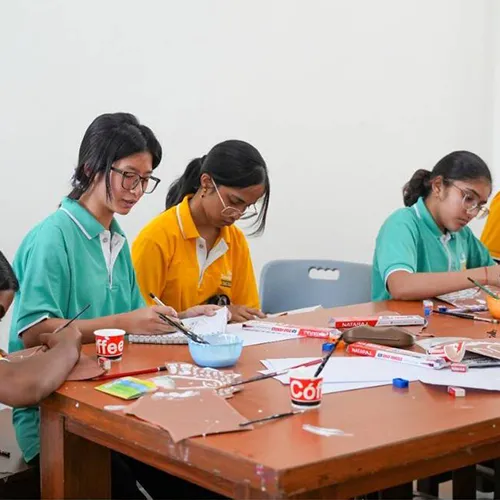
Brian Tracy, author of Eat That Frog, says that the most important habit is tackling your biggest, most dreaded task first.
For students, this usually means the hardest subject or the one you keep putting off. Getting that done first lifts a monumental weight off your chest — and the rest of the day feels a whole lot lighter.
Deep Work — Focus Over Frequency
Cal Newport’s Deep Work theory is one of the best frameworks for students. The core idea is that focused, uninterrupted work is far more valuable than frequent, distracted studying.
To put it into practice: study one subject at a time. Put your phone away. Close the other tabs. Focus all of your energy on that one subject for 45 minutes. Then take a quick 10-minute break and repeat.
This way of working helps students make the most of their time, reach their goals, and actually add value to their work instead of spreading themselves too thin across too many things at once.

Plan the Week Instead of Just the Day
Most students plan one day at a time. A smarter approach is to plan the whole week.
At the beginning of every week, map out:
- Test dates
- Assignment deadlines
- Sports practice
- Activities
- Personal commitments
Then break each of these down day by day. It prevents last-minute chaos and keeps stress at a much more manageable level.
Tackle Large Tasks Bit by Bit
Most students see a large chapter and immediately feel the “this is going to take forever” dread. Large tasks in general can feel the same way. But they can be simplified into:
- One concept summarised
- One short note
- One diagram
- Five definitions
- Ten practice questions
The momentum from small tasks builds quickly, and it becomes much easier to see that the end result is worth the effort.
Don't Neglect Fun and Relaxation
Thinking ahead is crucial, but plan for the good stuff too. Time should be set aside for sports, family, and yourself.
Taking breaks and having fun helps keep your mind fresh. Trying to stretch your mind without giving it room to breathe doesn’t work. Play helps you mentally reset so you can keep going
Follow a Realistic Daily Routine
An effective student schedule is not based on an arbitrary plan but on an achievable one. Here’s an example:
- Morning — Get up on time, shower, and do a little studying or review yesterday’s notes.
- During school — Focus in class. Write down all homework.
- Afternoon — Take a proper break.
- Evening — Physical activity — sport, a run, a walk.
- Night — Finish homework and set goals for the next day.
- Before bed — Read, wind down, and get to bed on time.
Routine matters more than anything else.
Take Five Minutes to Review the Day
A brief end-of-day review might be the best personal management tool existing. Each day, ask yourself:
- What did I get done?
- What wasn’t done?
- What was worth it?
- What was a waste of time?
Doing this honestly keeps things real and keeps you moving in the right direction.
Learn to Say No
Not everything on the table deserves a commitment. Not everything is worth it.
Your focus, energy, and time all hold increasing value over time, and it’s not selfish to protect them. It’s smart.
We don’t just teach these skills at The TonsBridge Residential and Day School, Dehradun. We live them. The structured residential life at The TonsBridge builds time management, discipline, and balance that sustains our students well beyond their time at school.