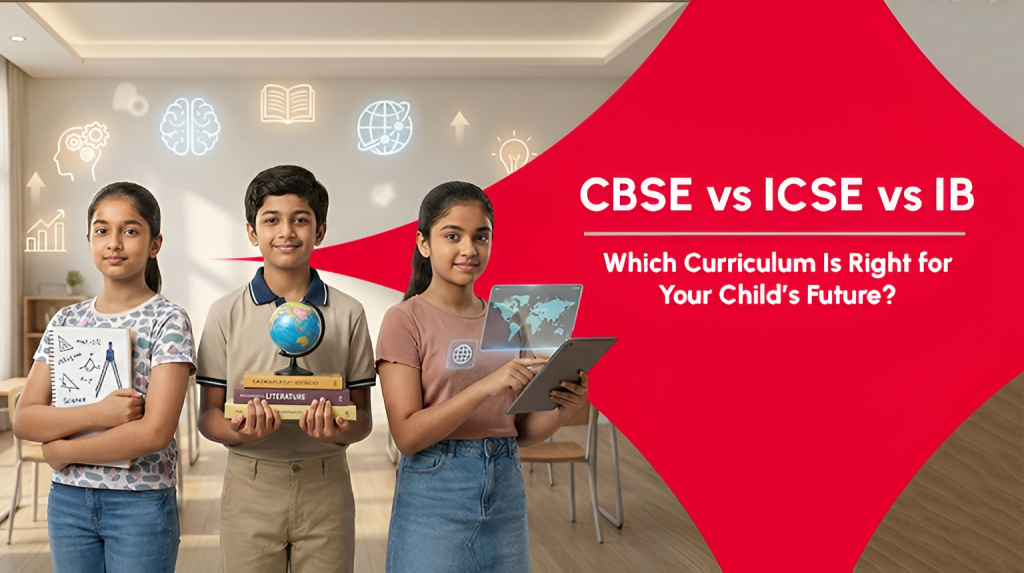








Selecting either a national board or an international curriculum sounds like choosing between tradition and progress. Most parents opt for the international system on the assumption that it is ahead, but this often fails to account for the internal progression at the best CBSE schools in India. The emphasis of these schools has shifted from memorizing subjects to fostering an active learning environment through an application-oriented architectural framework for the syllabus.
The divide between these two worlds of education is narrowing considerably. The Best CBSE Schools in India use their technical proficiency as high-speed rockets into today’s career space. It is not about meeting a syllabus, but about having the analytical capabilities to dominate the international scenario.
The Physics of the Learning Environment

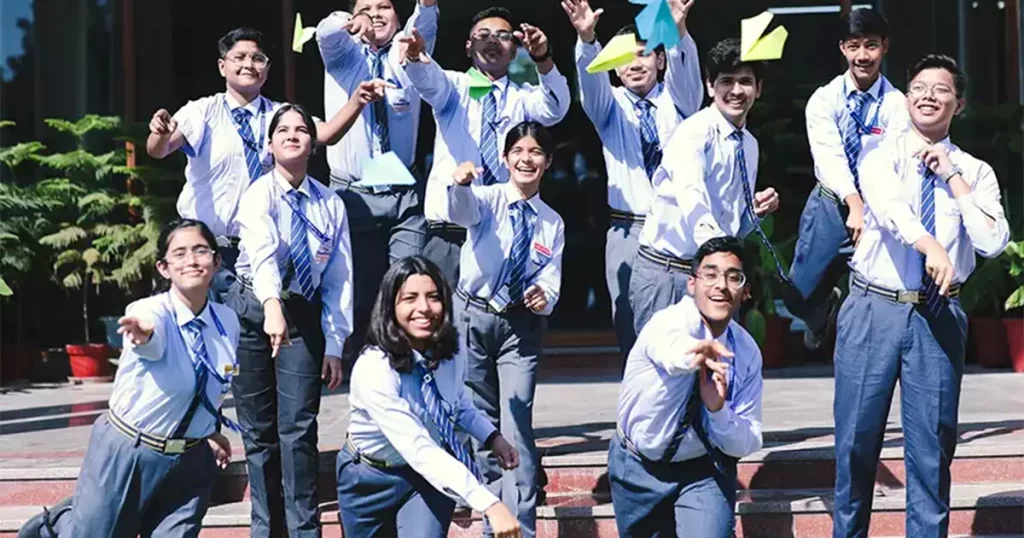
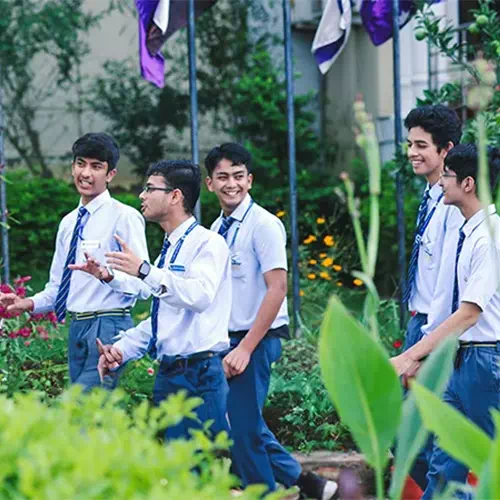
When evaluating an institution, the focus often lands on the library or digital tools, yet the biological state of the student remains the most critical variable. High-level academic performance is statistically improbable when a student remains in a state of sensory overload. This is why the geography of CBSE Boarding Schools in India, particularly those in the Doon Valley, provides a distinct functional advantage over urban campuses.
The urban setting puts a subtle “cognitive tax” on the teenage brain through the incessant barrage of sounds and polluted air, leading to divided attention and elevated levels of anxiety. The institution of The TonsBridge School provides an organic sound barrier, enabling the brain to shift from a highly charged laboratory of physics to a contemplative space devoid of the hustle and bustle of the city environment. Fresh air and sunlight are not mere luxuries but vital components that aid in the process of consolidating information and focusing attention.
How Assessment Works
The real difference between global boards and CBSE Schools in India isn’t found in the textbooks, but in how they measure a student’s understanding. You have to look past the glossy brochures to see how a school truly checks if a child has mastered a concept.
The Sprint vs. The Marathon: While international boards such as the IB favor a “slow burn” model of evaluation, relying on internal assessments and projects spanning a period of two years to favor students who demonstrate consistency and effective time management skills, the CBSE board system differs greatly. It utilizes periodic examinations culminating in a single board examination at the end of the year. Though stressful, the process evaluates the student’s capability of comprehending an entire year’s worth of material within a few hours.

The Creativity Paradox: There is a common fear that the national board is too rigid and kills original thought. This is a misunderstanding. Real creativity requires a solid foundation and a clear structure to work within. The Best CBSE Schools in India use the syllabus as a starting point, not a ceiling, encouraging students to innovate through experiments and hands-on inquiry.
Lab as a Think Tank: To find out whether a school lives up to its claims, don’t stop at flashy advertisements and pay a visit to the science lab. The top-notch schools are those whose science labs are buzzing with activity. Students record data and analyze the reasons behind any failures in their scientific experiments. The physics lab of an educational institution that looks spotless and untouched should raise a red flag.
In the top CBSE schools in India, like The TonsBridge School, the procedure for evaluation takes a step back from the traditional “question and answer” format. Although the school conforms to the high academic standards of the board in the form of tests, the real evaluation of a student’s development lies in his/her application of theoretical knowledge in practical situations. The teachers monitor how well the students utilize what they learn in the curriculum in their projects and lab experiments. Technical knowledge should never be evaluated without taking into consideration its real value.
Excellence and University Placement
The Common University Entrance Test (CUET) has completely altered the scenario of education by giving more importance to personal analysis scores rather than school reputations. In this way, the CBSE pattern of education gets an upper hand because of its structure aimed at imparting detailed subject matter knowledge needed to ace such tests. Students from international boards often find themselves at a disadvantage during this phase, frequently requiring outside coaching to bridge the gap in technical depth.
CBSE Schools in India that are considered to be good take care of this conflict by ensuring that the preparation for the entrance examination is a part of the regular academic schedule. It makes the learning process seamless without being worn out from a “double shift” of regular classes and coaching in the evenings. Additionally, the excellence of the educational institute is based on its teaching staff. Good teachers are facilitators helping students to discover answers by themselves.
Securing a Long-Term Investment
Choosing a school is a significant capital commitment that requires analytical rigor. One must look beyond initial tuition fees to consider the lifetime value of the institutional network and the cognitive habits formed during these years. A professional organization maintains transparency in its costs, avoiding hidden fees for uniforms or excursions, which reflects a commitment to administrative excellence.
Decision-making must be based on objective facts, prioritizing institutions on the basis of teacher retention rates, class size, and previous performance of universities. This is done with the aim of finding an atmosphere that matches a child’s particular abilities. Today, CBSE schools in India provide a foundation that is legally and academically robust enough to support success in any international setting. Spending time researching these factors guarantees a wise investment in the child’s future.
Aligning the Board with the Student’s Future
The decision to enroll in either a national program or an international one does not always hinge on determining which of the two provides a superior curriculum. Rather, it involves identifying the method that complements students’ particular thought processes and career objectives. Both pathways offer rigorous intellectual development, but they utilize different mechanics to achieve it.
The Case for CBSE Schools in India
In case one is looking to make a career in the fields of medicine, engineering, or civil services in the Indian subcontinent, then the top CBSE schools in India provide a structural edge that cannot be achieved elsewhere. The curriculum is geared towards mastering technical skills and developing resilience against competition. It equips students with all the necessary skills needed to face high-stakes exams such as the CUET, JEE, or NEET by developing a vast body of knowledge in the various disciplines.
The Case for International Boards
On the other hand, if a student favors liberal arts, design, or intends to join an undergraduate program in Europe or North America, an international board might be more appropriate. The key emphasis is placed on the “broad over narrow” strategy, with research across disciplines, time management, and internal portfolios being key considerations. If the student prefers to be assessed on a “slow burn” basis instead of a one-time final examination, international programs present a more diversified option.
Final Thoughts
The most productive educational path is found where a student’s specific learning style meets a school’s operational culture. With examples from schools like TonsBridge, it becomes clear that the national framework is not a limitation, but a foundation that supports high-level creativity, practical mastery, and a global outlook. The decision to place your child in a school is one of the most important decisions you will make during your child’s early developmental years. It requires more than a casual glance at a brochure.
Thus, whether your child attends one of the best CBSE schools in India or any international school, there will only be one common objective in the end, which is to cultivate a strong adult who can cope well in a challenging environment. The board is just the means to achieve that end; the environment, the teachers, and the values of the school are the components of the outcome. You need to explore them with the same enthusiasm as any other venture, and you will discover your foundation.
Frequently Asked Questions
1. How do the best CBSE schools in India prepare students for global universities?
By evolving beyond rote learning, these institutions focus on critical thinking and skill-first architecture. They provide the technical depth needed for entrance exams while fostering the analytical agility required by elite universities worldwide, ensuring students are competitive in any global jurisdiction.
2. Is the workload in CBSE boarding schools in India higher than in international boards?
The workload is distributed differently. While international boards demand continuous project-based output, the CBSE system builds resilience through a high-stakes terminal exam. This evaluates a student’s ability to synthesize massive data sets and perform under definitive, high-pressure conditions.
3. Does a national curriculum limit a student’s creativity?
No. Meaningful innovation requires a disciplined framework. Top schools use the syllabus as a baseline for original experimentation and inquiry. By mastering core principles first, students gain the necessary tools to innovate effectively within complex scientific and literary structures.
4. Why is the school’s environment a factor in academic success?
Physical geography determines cognitive bandwidth. Locations like the Doon Valley offer a biological buffer against urban noise and pollution. This high-oxygen, low-stress environment lowers cortisol levels, allowing the nervous system to focus entirely on deep, analytical learning.
5. How has the CUET changed the value of a CBSE education?
The CUET prioritizes objective subject mastery over institutional branding. Since the exam aligns with the national syllabus, CBSE students gain a structural advantage, eliminating the need for exhausting outside coaching and making the path to higher education more efficient.