







Which career actually makes sense after Class 12 Science? This is a common question almost every student faces after Class 12th exams but what needs to be remembered is that a popular degree is not necessarily the right one. Completing Class 12 in the Science stream does not mean choosing only between engineering and medicine. PCM keeps technical routes such as engineering, architecture, computing, defence, and mathematical fields open. PCB can lead to medicine, allied healthcare, biotechnology, agriculture, and life sciences. Taking PCMB keeps more of these routes available, but the additional subject load is substantial.
The best career options after 12th science depend on the subjects you have studied, your entrance requirements, your individual interests, and the type of work you want to pursue. This guide covers the main career options after 12th science and the factors worth checking before you choose a degree.
-
- Understanding PCM, PCB, and PCMB
- Career Options After 12th Science for PCM Students
- Career Options After 12th Science for PCB Students
- Career Options After 12th Science PCB Without NEET
- Check the Admission Route Before Choosing
- Before You Put a Career Choice on Paper
- Medical Support and Food Science
- How to Decide Which Path Fits You
- Why Career Exploration Should Begin Before Class 12 Ends
- Frequently Asked Questions
Understanding PCM, PCB, and PCMB
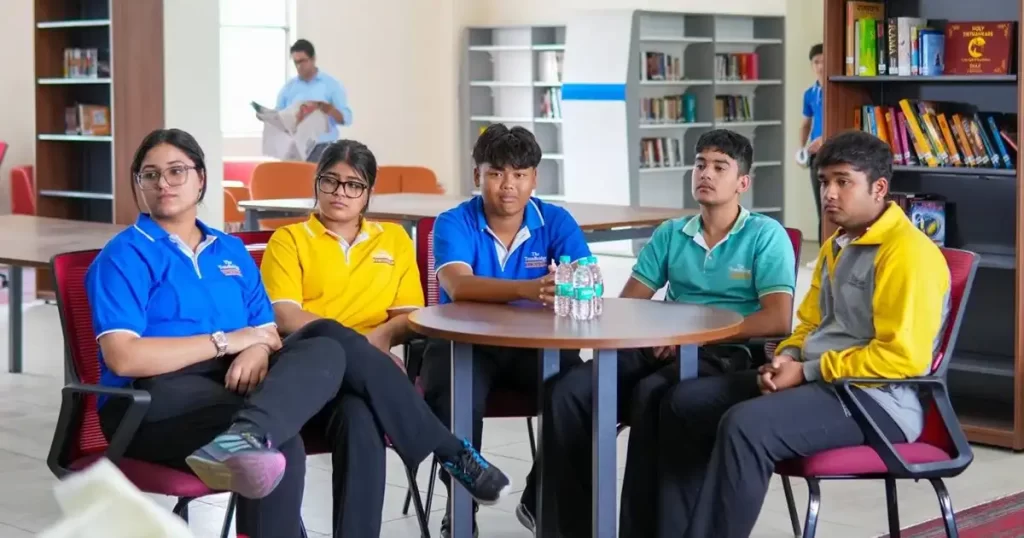
Your Class 11 and 12 subjects give you an early indication of which degrees may suit you over several years of higher study.
- PCM: Suitable for students who enjoy Mathematics, numerical problem-solving, spatial logic, and physical systems. It keeps engineering, computing, architecture, and quantitative fields open.
- PCB: Suits students who are interested in healthcare, human biology, laboratory work, or life-science research.
- PCMB: Taking both Mathematics and Biology keeps more engineering and life-science routes open, subject to the eligibility requirements of individual courses and entrance examinations. However, the additional subject load is substantial.
The subjects you enjoy most can give you a first idea of which fields to investigate. Mathematics may lead towards computing or statistics, Physics towards engineering or aviation, while Biology can lead towards healthcare, biotechnology, agriculture, and environmental science.
Career Options After 12th Science for PCM Students
- PCM can lead to technical, analytical, design, and defence-related courses after Class 12.
Engineering and Technology
Engineering offers one of the widest ranges of options for PCM students. Someone who prefers programming and algorithms may find Computer Science a better fit, while an interest in machines, structures, or electronics points towards Mechanical, Civil, or Electronics Engineering. Chemical Engineering provides another path, merging physical chemistry with manufacturing processes.
Architecture and Spatial Planning
B.Arch can suit someone who enjoys Mathematics but also wants to work with drawing, spatial planning, and building design. Depending on the institution and admission route, applicants may need NATA or JEE Main Paper 2.
Data, Mathematics, and Analytics
Mathematics can lead to several degrees outside conventional engineering. Data Science and Statistics suit students who enjoy working with numbers, patterns, and datasets, while Actuarial Science focuses on financial risk and statistical modelling. These programmes focus on statistical computing, financial modeling, and data analysis.
Defence Services and Aviation
NDA could be one option if you are interested in joining the Armed Forces. The procedure involves first taking the UPSC written test followed by the SSB test for those who qualify in the next round. In case you meet the necessary qualification of having Physics and Mathematics, then commercial pilot course and Nautical Science courses would be some other options to consider.
Read Our Blog: Time Management Tips for Students: School, Activities, and Everything in Between
Career Options After 12th Science for PCB Students
PCB suits students who are interested in healthcare, human biology, laboratory work, or life-science research.
Medicine and Clinical Fields
MBBS covers human anatomy, physiology, pathology, pharmacology, and clinical training. BDS focuses on oral healthcare and maxillofacial procedures. MBBS and BDS admissions in India use NEET-UG, while the admission process for AYUSH programmes such as BAMS and BHMS follows the applicable national, state, and institutional rules.
Allied Healthcare
Working in healthcare does not require becoming a doctor. Allied fields offer specialized alternatives:
- Bachelor of Pharmacy (B.Pharm): Focuses on pharmaceutical chemistry, drug testing, and formulation safety.
- Bachelors in Physiotherapy (BPT): Dealing with rehabilitation, physical recovery, movement, and management of injuries.
- B.Sc in Medical Laboratory Technology (BMLT): Dealing with clinical pathology, diagnostic tests, and laboratory management.
- B.Sc in Radiology & Imaging: Training radiologists to handle diagnostic imaging equipment effectively.
Biotechnology and Life Sciences
Biotechnology involves the application of the knowledge of the living world to spheres like medicine, agriculture, and industry. If you have an interest in laboratory research, genetics, or cell biology, you can consider courses like B.Sc or B.Tech in Biotechnology, Microbiology, Biochemistry, and Bioinformatics. Some courses include practical lab sessions, while some deal with biological data and computers.
Career Options After 12th Science PCB Without NEET
Not every PCB student wants to take NEET or pursue a clinical degree. That does not mean you have to move away from Science. There are several courses where Biology remains useful, but the work looks quite different from that of a doctor.
- B.Sc Agriculture: A good option if you are interested in crops, soil, plant breeding, and how science is used in farming. The course can also introduce you to areas such as agricultural production and farm management.
- Food Technology: This field deals with what happens to food between production and consumption. You may study processing, preservation, quality checks, and food safety.
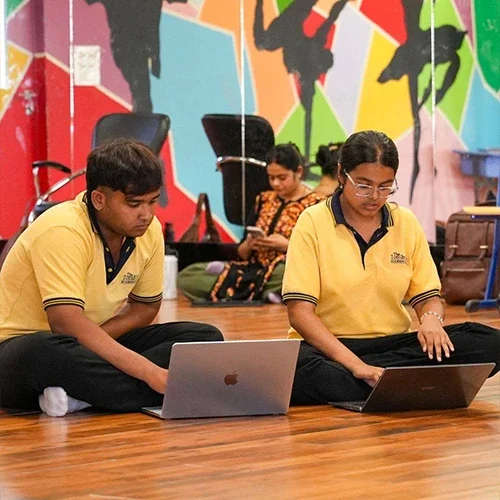
- B.Sc Nursing: Nursing involves much more than assisting doctors. Students learn about patient care, clinical procedures, community health, and the day-to-day management of people receiving treatment.
- Other Life-Science Courses: You can also look at Biotechnology, Environmental Science, or Horticulture. The subjects and admission rules vary, so check the course requirements of individual colleges before applying.
Read Our Blog: From E-Learning to Virtual Labs: How The TonsBridge Integrates Technology Into Every Aspect of Education
Check the Admission Route Before Choosing
Before applying, check the specific admission requirements for your chosen programme:
- JEE Main: Used for admission to several engineering institutions and is the examination through which candidates qualify for the JEE Advanced eligibility pool, subject to the applicable criteria.
- JEE Advanced: Used for undergraduate admission to the IITs, subject to eligibility requirements.
- NEET-UG: Used for MBBS and BDS admissions in India.
- NATA / JEE Main Paper 2: Relevant to B.Arch admissions depending on the institution and applicable rules.
- UPSC NDA Examination: Written examination followed by the SSB process for eligible candidates.
- CUET / University-Specific Routes: Used for many undergraduate Science and other programmes, depending on the institution and course.
Before You Put a Career Choice on Paper
A Science degree can sound very different from what you actually study in college. That is where many Class 12 students get stuck. They know the names of popular courses, but have not yet considered what those courses involve week after week.
Here are a few things worth checking while you are still deciding.
Start with the subjects, not the course name.
“Data Science,” “Biotechnology,” and even “Engineering” cover a lot of ground. Read through the subjects taught in the first year. If you dislike programming, for example, a course with a heavy coding component may become frustrating even if the career prospects look good.
Picture an ordinary working day.
This is easy to overlook. An architect spends time designing and revising plans. A laboratory professional may spend hours handling samples and recording results. A software professional works extensively with code, systems, or data. Which kind of work sounds tolerable to you on a regular Tuesday, not just exciting when you read about the career online?
Then check how you get there.
Some choices require JEE or NEET. Others may involve NATA, NDA, CUET, a university entrance test, or admission based on marks. The requirements can also differ between institutions. Check them while you still have time to plan your Class 11 and 12 preparation accordingly.
Do not ignore the parts of the course that happen outside lectures.
Laboratory sessions, projects, internships, clinical training, design work, field visits, and software-based assignments can make up a sizable part of some degrees. If you prefer learning by doing, this matters just as much as the list of theory subjects.
And give yourself room to change your mind.
You do not need to have your entire career mapped out in Class 11. What matters is knowing enough about a few possible paths to make a sensible choice when applications begin. Talk to teachers, counsellors, seniors, or people working in fields you are considering, then compare what you hear with your own interests.
Medical Support and Food Science
True physical growth requires careful attention to daily nutrition and medical care. The school manages these needs with scientific precision rather than treats them as secondary duties.
The school mess completely rejects cheap, mass-processed ingredients. A major portion of the weekly menu relies on fresh, organic items sourced directly from local regional farms. This ensures a clean caloric balance for active athletes. The kitchen staff plans meals to give steady, long-lasting energy, preventing the sudden tiredness that ruins afternoon classroom concentration.
Medical situations are managed by an on-site infirmary with a separation ward and a recovery room. The resident medical team works directly with local hospitals and medical colleges to ensure instant specialist care if an emergency occurs.
However, physical fitness is just one aspect of taking care of the students. The school has two full-time counselors within its campus, one for student wellness and psychological equilibrium and another for career direction. With this approach, the school takes equal care of the child’s psychological well-being and future university preparation as it does when issuing report cards for their terms.
How to Decide Which Path Fits You
When comparing after 12th science career options, start with the subjects you genuinely enjoy rather than the salary figures attached to a course.
So, before applying, look at the actual syllabus and entrance requirements. Find out what practical training the course involves and what graduates typically do at work. A degree may sound appealing on paper and still lead to a type of work you do not enjoy.

Why Career Exploration Should Begin Before Class 12 Ends
Students do not have to wait until board results arrive to compare these options. Classes 11 and 12 are the ideal time to identify subject strengths, evaluate entrance requirements, and explore university pathways.
At The TonsBridge School, this exploration can take place alongside senior-secondary Science. Students work with CBSE Physics, Chemistry, Biology, and Mathematics while gaining practical laboratory exposure and guidance around competitive entrance pathways. This gives them time to compare higher-education options before Class 12 ends.
There is plenty of time to make this decision, but leaving it until after Class 12 can make the process harder. Use your senior-secondary years to compare courses, entrance requirements, and the kind of work each field involves.
Frequently Asked Questions
What are the career options after 12th science?
Science stream career options after 12th include engineering, medicine, architecture, computing, allied healthcare, biotechnology, agriculture, defence, and mathematical fields. The route you take depends on your subject combination, entrance requirements, and personal interests.
What are the career options after 12th science PCM?
PCM can lead to engineering, architecture, Computer Science, Data Science, Statistics, Actuarial Science, defence services, aviation, and other technical fields. For students comparing the best career options after 12th science PCM, the choice should depend on their interests, eligibility, and the type of work they want to pursue.
What are the best career options after 12th science PCB without NEET?
Promising non-NEET fields include Bachelor of Pharmacy (B.Pharm), B.Sc Nursing, B.Sc Biotechnology, Bachelor of Physiotherapy (BPT), B.Sc Agriculture, and Food Technology.
Can a PCB student pursue computer applications or software development?
Yes. Some universities accept PCB students into Bachelor of Computer Applications (BCA) programs or design streams like UI/UX design, though eligibility rules vary by institution.